Redefining value in luxury F&B
From menuless restaurants to fashion-house cafés, luxury food and drink brands are rewriting what it means to offer something truly worth having. We wrote this piece for Fox Quarterly from Fox Communications, exploring how new codes of value are showing up in the luxury sector:
Warren Buffett once said “price is what you pay, value is what you get” – and while the billionaire investor is better known for his love of fast food than fine dining, his aphorism has never felt more relevant to the luxury food and drink world. Today’s consumer’s sense of value isn’t about price – it comes down to how they feel about the product, and the unique sense of identity it creates or confirms for them. Value is determined not by what consumers put in, but by what they get back.
This dynamic operates at every price point but feels most radical in the luxury food and drink space. Not only are the stakes (and prices) higher, but any conversation around ‘value’ can throw some luxury brands into an existential crisis, as ‘luxury’ and ‘value’ have never been easy bedfellows. However, the luxury brands – whether they’re legacy empires or challenger start-ups – that understand these new codes of value and bravely co-create meaningful identities with their consumers, are the ones most likely to succeed in the current landscape.
Value innovation is most evident in three core areas of personalisation, collaboration and sustainability:
For me only: deep personalisation
Personalisation is one of the most powerful ways luxury food and drink brands can deliver value, especially if it rips up the rule book. Luxury consumers want a break from everyday rules, as demonstrated by a flurry of recent no-menu restaurants. The signature experience at Osip in the English county of Somerset offers a ‘story’ of home-grown vegetables and wild herbs from the surrounding countryside – but no menu. Up in Scotland, TRUST by Moudou in Glasgow platforms chef’s creativity by eliminating choice entirely. Guests simply share their dietary needs at the time of booking, then surrender to a bespoke menu created in the moment.
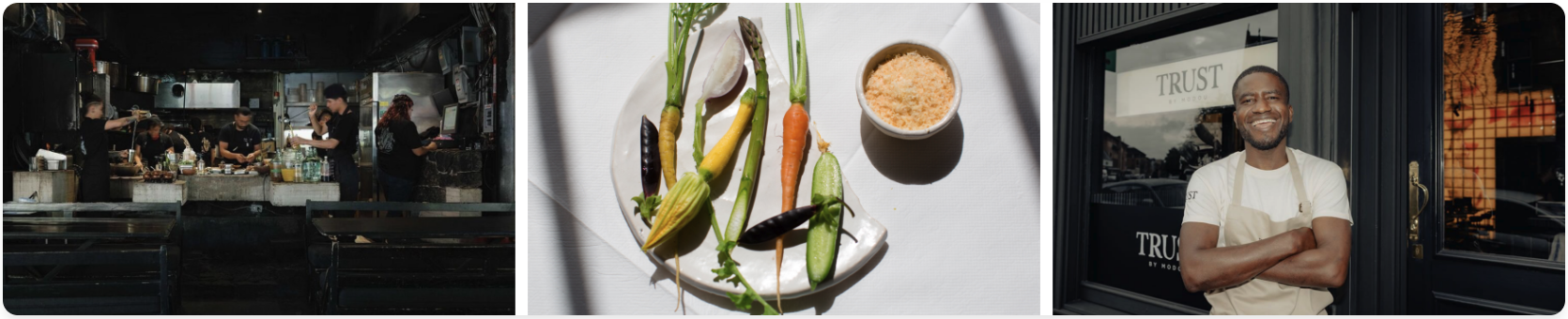
Menuless Expendio de Maíz in Mexico City brings guests Michelin-starred tacos tailored to their taste until they say stop, while the waitstaff at high-end Miami restaurant San Lorenzo only ask “Carne or pesce?” before beginning a $70 prix-fixe journey. Doing away with formalities that no longer serve the modern consumer is an inspired way to revitalise the hospitality category and redefine both luxury and value.
The appetite for personalisation doesn’t stop at the restaurant door. In the home, private chefs create the ultimate personalised food and drink experiences traditionally associated with fine dining. Tiktok has shone a light on this previously behind-the-scenes role, with over 1.5 billion views for #privatechef revealing the quirks and kudos of cooking for the super-rich. This taste of luxury is also trickling down, however, as The Times reports a growth in private chef bookings among middle-class customers for meal prep as well as special-occasion dining. A YouGov survey found that 38 per cent of diners are eating out less than they did a year ago, citing rising costs and the need to save money; in that context, a personalised menu from a private chef in the comfort of your own home looks like comparatively good value.
Food, but make it fashion: cross-category collaborations
Collaboration and cross-category campaigns bring two unexpected elements together to create something fresh yet fleeting. Scarcity is surely the greatest marker of luxury value, and food serves up an endless array of possibilities. Visionary Provençal fashion house Jacquemus often plays with food, referencing butter, fresh produce, and milk in its collections. The launch of its LA store included a surrealist banana campaign, which elevated food into fashion and playfully pushed the high-end brand into the grocery space.
Luxury beauty also has a seat at the table with food collabs: see Hailey Bieber’s pop-up Rhode cafe in Sydney celebrating luxury beauty with lamingtons, blueberry buttermilk waffles, and coffee to-go. Then there’s the MAËLYS X Whipnotic gourmand body care collab, and the Rare Beauty X Tajín spice-inspired lip gloss which saw Selena Gomez’s cosmetics brand team up with the Mexican seasoning blend. Two for the price of one will always feel like good value.
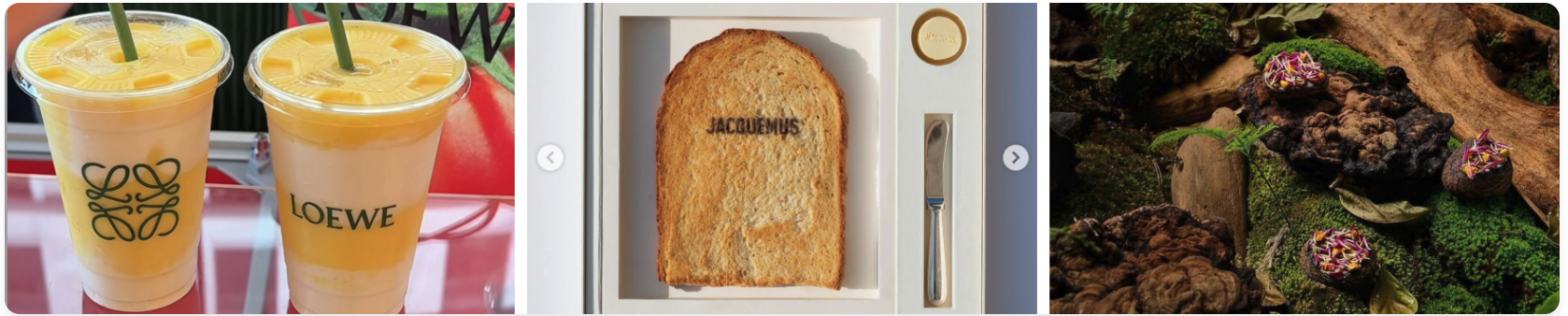
Bakeries and cafés have become hot spots for luxury collaborations; they’re cornerstones to consumers’ routines of daily bread or an oat-milk latte, and rooted in value. We’re seeing a boom in luxury independent operators, and hotel bakeries replacing the hotel bar. Spanish luxury retailer Loewe has decamped to the café, with a Loewe X Tease matcha to launch new vegetal fragrances, as well as a bubble tea collab for Frieze London, and gelato in Sydney. Likewise Fortnum & Mason’s high-low food collabs include hooking up with Shake Shack and a Margate chippie to increase the store’s reach. These legacy brands understand that history might bring gravitas, but value-driven collaborations ensure relevance into the future.
Cult status: next-level sustainability
Hospitality brands that radically stand by their principles are rewarded with the kind of fierce, identity-driven loyalty that defines cult status. This is especially true for global restaurant brands going above and beyond to deliver radical luxury sustainability.
Everything from the microherbs to the furniture at hyper-local Locavore NXT on Bali is drawn from Indonesia, for example. Chefs source over 400 plants from the rooftop food forest, and guests can trek into the jungle to forage ingredients for their 16-course fine-dining menu. Simon Rogan, the British chef behind three-Michelin-starred L’Enclume, opens Our Farm on select summer Saturdays in 2026, with just 16 guests per sitting enjoying behind-the-scenes access and a farm-to-table banquet. Even food-waste disposal appliance InSinkErator is tapping into the luxury market with a pop-up Shoreditch restaurant, La Poubelle, launching in spring 2026 that playfully transforms discarded ingredients into a £149 tasting menu.
Sustainability should be available to all, but these new levels of hard-to-achieve sustainable luxury have created a kind of ‘cathedral economy’ – a concentration of eco-conscious aspiration in one destination, drawing devotees from far afield. It turns consumers into evangelists, as their own sustainability values are reflected back to them in glorious technicolour experiences.
For luxury food and drink brands experimenting with personalisation, collaboration or sustainability, the balance always hangs between expanding reach without eroding brand equity. Noma was a world leader in this, closing its acclaimed Copenhagen restaurant in 2024 and relaunching as a food innovation lab, pivoting to exclusive high-value pop-ups alongside limited-drop pantry items that offer a more accessible taste of the brand. The resignation of co-founder and head chef René Redzepi in March 2026 –following a New York Times exposé in which dozens of former staff described years of physical and psychological abuse – demonstrates that all food and drink turns bitter if a brand cannot uphold its true values.